
People
Current Members:
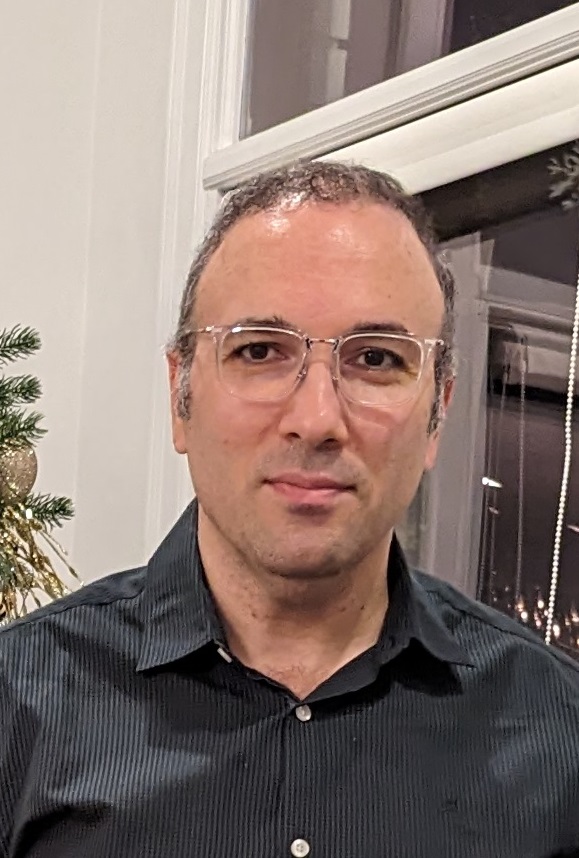
Farhad Farzbod, Associate Professor
Farhad is an associate professor in the mechanical engineering department of the University of Mississippi (Ole Miss). He joined Ole Miss in the fall of 2015.
Previously, he was a research hardware engineer at Google[x] lab. His work involved modeling and design of various transducers and sensors such as next generation bone conduction transducer. They looked into the future technologies for sensors and actuators. He was also an adjunct faculty at the mechanical engineering department of San Jose state university. Before moving to the bay area, he was a Postdoctoral Researcher / Associate Engineer at Idaho National Laboratory (INL),which is one the 16 National Laboratories operated by the United States Department of Energy. He worked in the Energy & Environment Science and Technology Directorate. He was working mainly in the area of modeling hybrid systems by Modelica and material characterization using laser ultrasound.
Farhad’s research experience lies in the general areas of vibrations, mechatronic design, controls, and solid mechanics. He possesses a strong background in analyzing wave propagation in periodic systems, finite element analysis, sensor design, multi-scale modeling, design of smart materials, and ultrasonics.
He holds a Ph.D. in Mechanical Engineering, a master’s degree in Mathematics, and a master’s degree in Electrical and Computer Engineering, all from the Georgia Institute of Technology (Georgia Tech). He also earned a master’s in Mechanical Engineering from the University of Toronto and his bachelor’s degree from the University of Tehran. You can see his resume here and his home page is here.
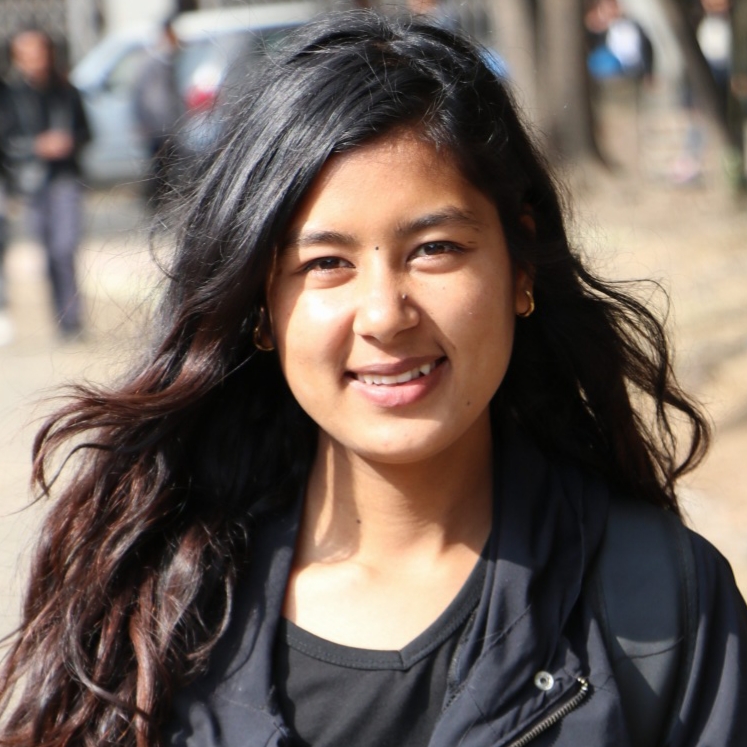
Anisha Thapa, Master Student
Anisha Thapa is a master student in Engineering Science with a focus on Mechanical Engineering. Currently, she contribute to the academic community as a Teaching Assistant for Intermediate Dynamics. Her research passion centers on the innovative intersection of machine learning and material science, particularly in measuring band gaps in phononic crystals. She holds a Bachelor’s degree in Mechanical Engineering from Tribhuvan University, Thapathali Campus, Nepal. Her undergraduate thesis showcased her prowess in design and fabrication through the development of an autonomous fixed-wing UAV. Beyond her academic and research endeavors, Anisha is a passionate traveler, always eager to explore new destinations and cultures. Her multifaceted interests and dedication make her a valuable member of the Mechatronics and Vibration Lab.
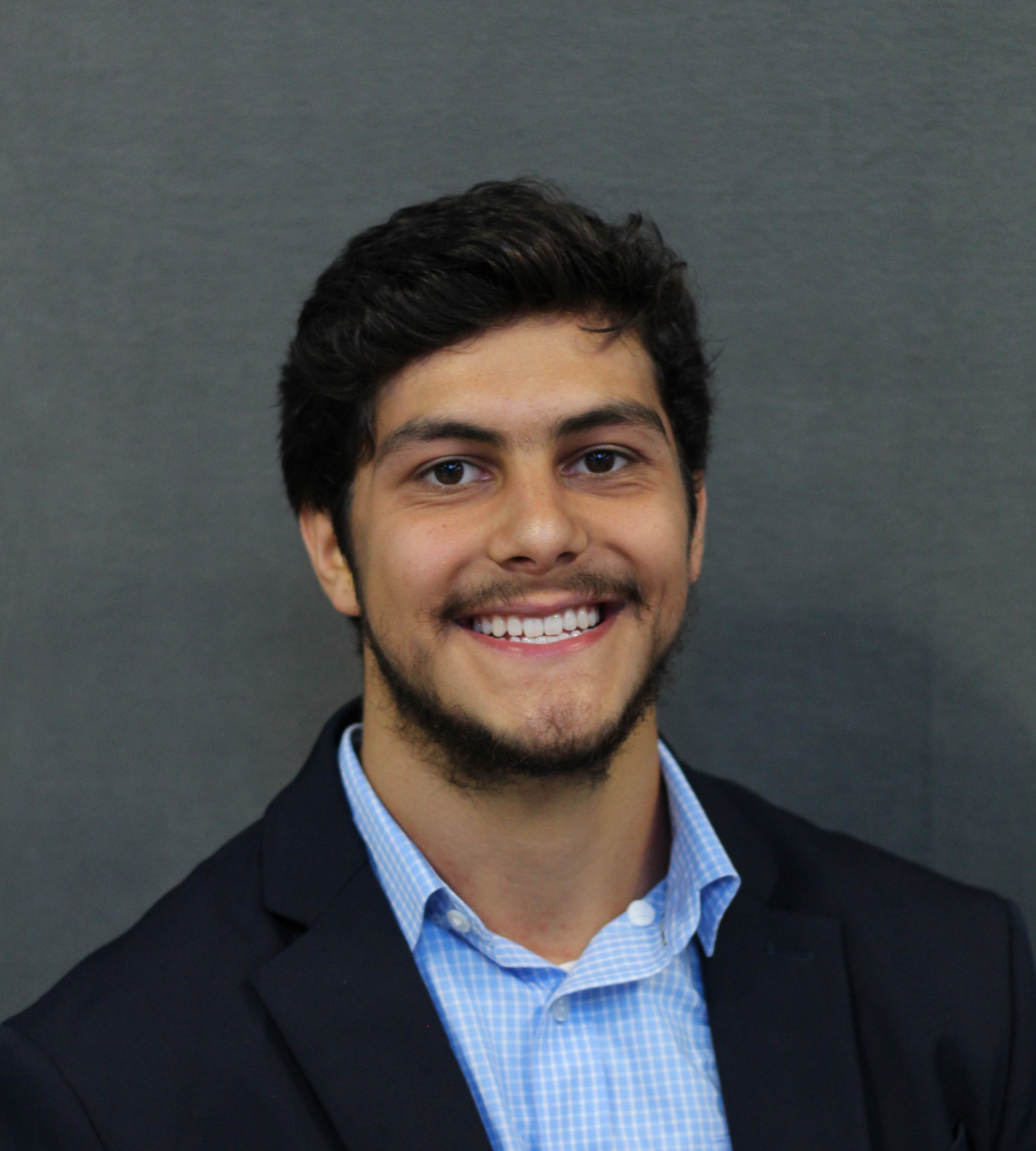
Jake Akins, Master Student
Jake has graduated summa cum laude with a Bachelor of Science in Mechanical Engineering, he has been awarded Taylor’s medal, the highest honor for an undergraduate student at the University of Mississippi. Jake is currently a graduate student at the University of Mississippi pursuing a masters degree in engineering science with an emphasis in mechanical engineering. He is involved in research supported by the Air Force Research Lab which melds the fields of engineering and the biological sciences.
Past Members:

Parker Brewster, Master Student
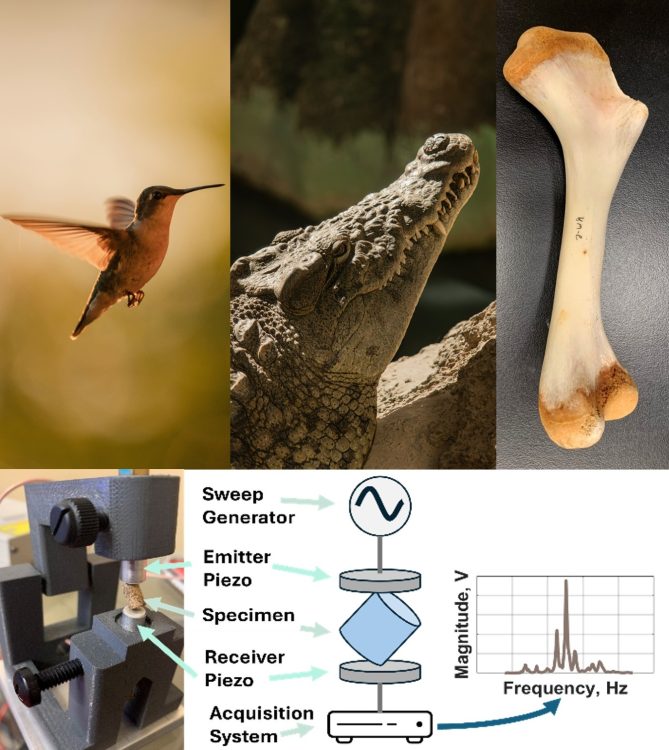
Parker Brewster obtained his Master’s degree from this lab, where his research focused on Resonant Ultrasound Spectroscopy of bones in both ectotherm and endotherm animals. He was also a member of a team that modeled the structural analysis of a communication satellite. Beyond his academic pursuits, he founded a med-tech company with a flagship device that has advanced through two medical device accelerators. He has held research positions in five areas: radiology, pharmacognosy, DNA studies, bioinformatics, and mechanical engineering. His bioinformatics training was completed through an NIH fellowship at the National Center for Advancing Translational Sciences. Currently, he is pursuing a PhD in Biomedical Engineering while actively involved in entrepreneurship as a Southeast Startup Ecosystem Builder.

Gagan Dangi, Undergraduate Student
Gagan holds an undergraduate degree (honors) in Mechanical Engineering from the University of Mississippi. He has worked as a Teaching Assistant for Engineering Analysis III and as a member of the Engineering Student Body Leadership Council. His honors thesis work includes the Analysis of Scramjet Engine Fuels with the study to lower starting Mach number. He currently works as an Operations Engineer at Boston Metal.

Tereza Janatova, Master Student
Tereza Janatova, a native of the Czech Republic, holds a bachelor’s degree in electrical engineering with an emphasis in biomedical engineering and a master’s degree in engineering science with an emphasis in mechanical engineering. Tereza is a former student-athlete at the University of Mississippi, where she competed as a member of the women’s tennis team and held several leadership positions as a member of the Student-Athlete Advisory Committee, a board member of the Rebels’ international, and vice president of Eta Kappa Nu. For her engagement in community service, academic and athletic achievement, Tereza received several accolades and scholarships, most notably the NCAA postgraduate scholarship, SEC Scholar-Athlete of the Year, and SEC Brad Davis Community Service Award. Her research was in the area of topologically optimized medical cast. She is currently a research engineer in Biomedical field.
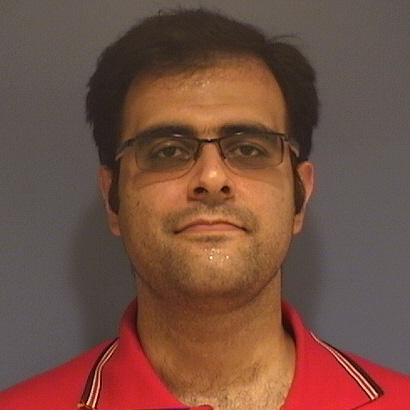
Masoud Naghdi, PhD Student
Masoud graduated with PhD in Mechanical engineering in the summer of 2021. His research was in the area of Nonreciprocity Applications in Acoustics and Microfluidic Systems. He published two journal papers and various conference papers when he was the member of the lab. His research involved theoretical work and fabrication. He served as TA for various graduate and undergraduate courses such as mechatronics, dynamics, engineering system analysis and design, and linear controls. He got his undergraduate degree from the IKIU and his masters from Isfahan University of Technology in Iran both with distinction.
He is currently a visiting assistant professor at New Mexico Institute of Mining and Technology.
Sudesh Pathak, Undergraduate Student
Sudesh holds an undergraduate degree with a major in Mechanical Engineering and a minor in Computer Science. He was an honors student and had been on Chancellor’s Honor Roll every semester. He had worked as a Student Ambassador for the School of Engineering, Teaching Assistant for Mechanics of Materials, and Resident Assistant. He worked with Kohler Engines as a Mechanical Design Engineering Co-op and has been working in various engineering firms in the SF bay area since graduation. As an undergraduate research assistant, his involvement in the lab included modeling and simulation of metamaterials with electrostatic interactions.
Christopher Sevigney, Master Student
Chris Sevigney holds BS and MS degrees in Mechanical Engineering from the University of Mississippi, where his research focused on structural acoustics and ultrasonic methods for NDE. His paper in this subject was published in ASME journal of Vibartion and Acoustics. His work was partly funded by the air force research lab.
He is now a robotics Ph.D. student at Georgia Tech and a member of the BioMedical Mechatronics (BM2) Lab, where he is working under Dr. Yue Chen to develop modern robotic systems for medical applications.
Research
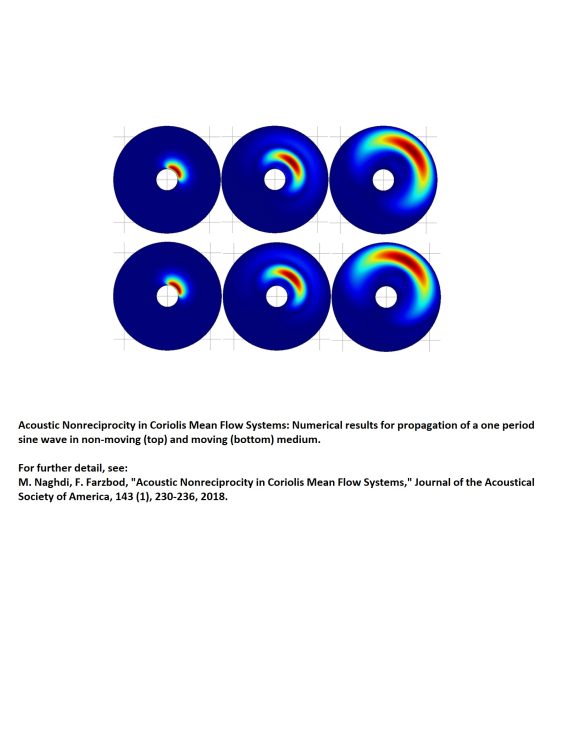
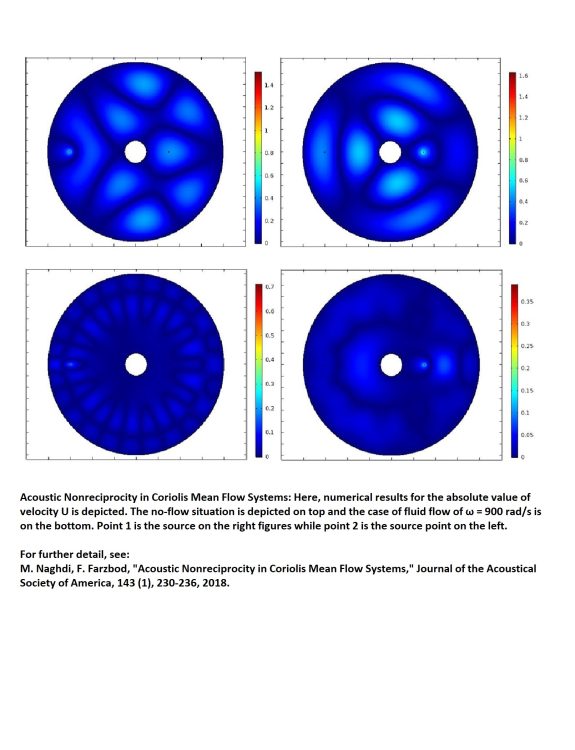
(1) Acoustic Metamaterials and Periodic Structures: Periodic structures, especially in the form of acoustic metamaterials, exhibit extraordinary wave manipulation capabilities. These materials derive their unique properties not only from the characteristics of their unit cells but also from how those cells are spatially arranged and coupled. The interplay between geometry and mechanics enables functionality such as frequency filtering, wave attenuation, and directional control—making them ideal candidates for acoustic filtering, sound cloaking, and beam steering applications.
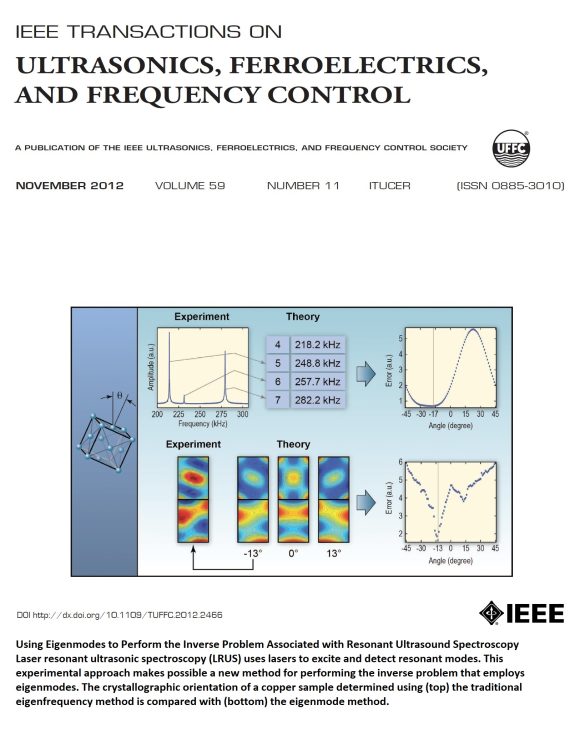
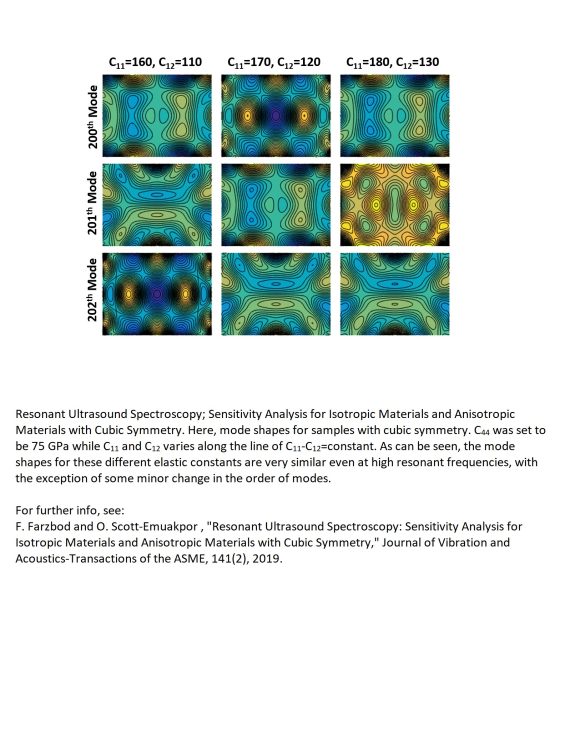
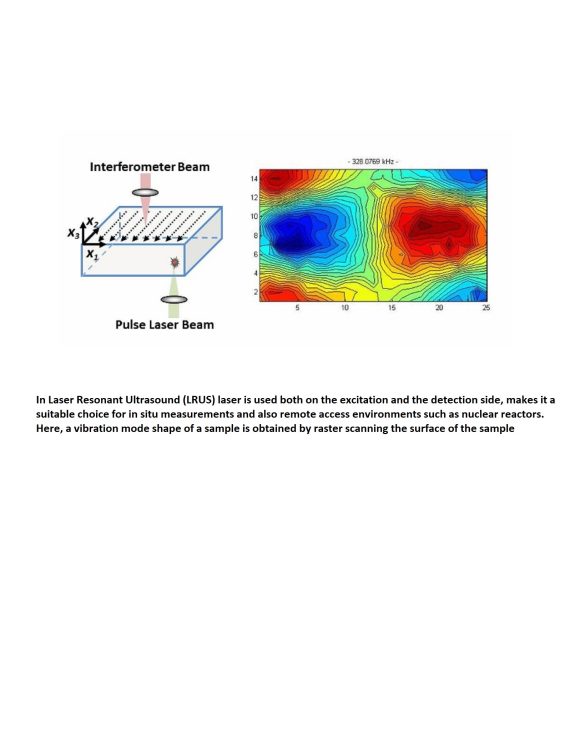
(2) Material Characterization Using Resonant Ultrasound Spectroscopy (RUS): Resonant Ultrasound Spectroscopy is a powerful, non-destructive method for determining both elastic and anelastic properties of materials. RUS is particularly suited for characterizing anisotropic media, such as single crystals and advanced ceramics, by measuring the free vibrational modes of precision-machined samples. However, challenges remain, especially in sensitivity to certain elastic constants—some of which contribute minimally to the observed resonant frequencies. This sensitivity issue has motivated continued research into optimization of RUS measurement and inverse modeling techniques. RUS is critical for emerging high-performance materials such as ultrahigh-temperature ceramics (UHTCs), which are under investigation for hypersonic aerospace and turbine engine applications. These materials must endure extreme thermal and mechanical loads while maintaining structural integrity. As digital twin concepts evolve—aiming to create high-fidelity, component-specific simulations of critical infrastructure—accurate spatial mapping of elastic properties becomes indispensable. Applications range from predictive maintenance in gas turbine fleets to performance modeling of reusable atmospheric re-entry vehicles.
(3) Biologically Inspired Materials: We are also exploring bioinspired material behavior, particularly how certain natural systems maintain structural performance under cyclic thermal stress. This work investigates how some biological tissues manage mechanical integrity despite extreme environmental variation. Preliminary findings suggest that nature may offer design strategies for engineering materials with enhanced fatigue resistance—a line of inquiry with broad implications for thermal protection systems, structural health monitoring, and next-generation aerospace materials.
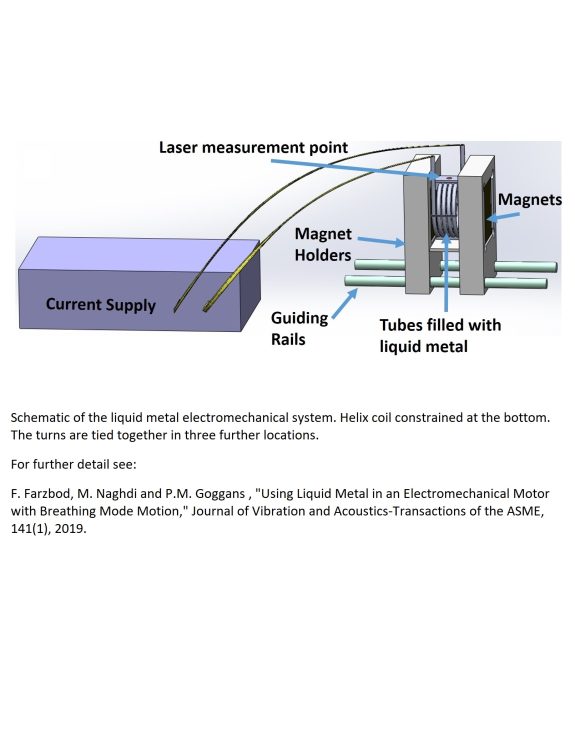
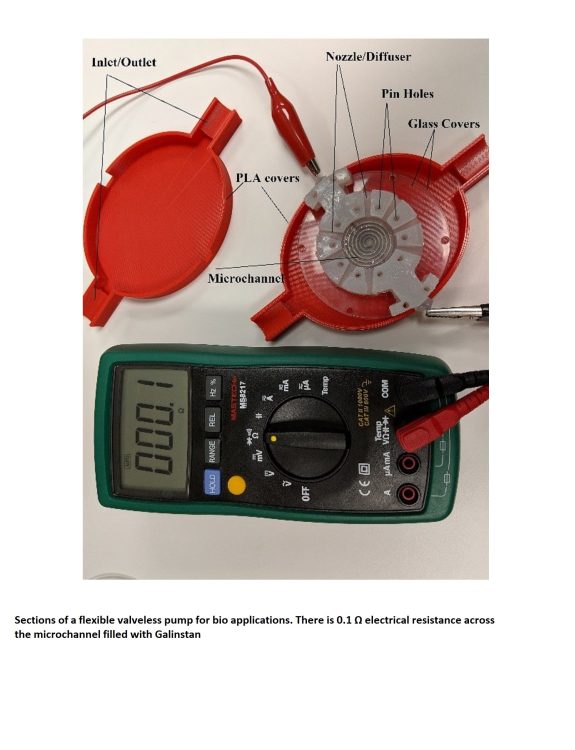
(4) Soft and Hybrid Actuation Systems: Our group has been actively developing novel actuators leveraging liquid metals and electroactive polymers. One stream of this research has focused on creating scalable valveless micropumps and breathing-mode actuators, offering potential in wearable and biomedical systems due to their compact form factor and high reliability. A second focus area involves the design of high-bandwidth, low-loss actuators based on graphene-reinforced polymer composites. These systems combine responsiveness and mechanical robustness, making them promising for dynamic structural and soft robotics applications. This work is conducted in collaboration with colleagues in Civil and Chemical Engineering.
Teaching
Our location:
Find us (the lab) at Brevard Hall: 1806 University Cir #143, University, MS 38677
Farhad’s office is at 203 Carrier Hall: 1764 University Circle, University, MS 38677